Overview
During the reporting timeframe from 20.06.2026 till 28.06.2026 (Monday to Sunday), parliamentary inquiries heavily focused on industrial competitiveness, the impacts of the Middle East energy crisis on supply security, and the ongoing adaptation of the Emissions Trading System (ETS). Additional prominent themes included the deployment of sustainable aviation fuels, the socio-economic effects of renewable energy infrastructure development, and the regulatory frameworks governing electricity markets and grid connections. In total, 30 Parliamentary Questions (PQs) are covered in this report; 16 have been answered by the Commission, while 14 remain pending.
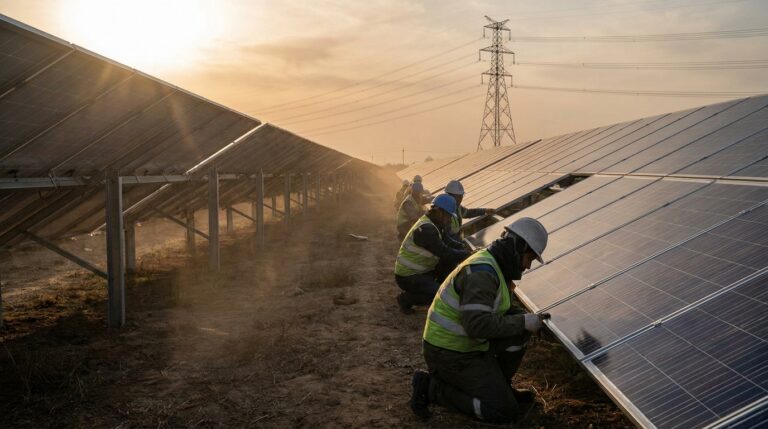
❓ Environmental Impact of a Photovoltaic Park in Preveza
Submitted by Lefteris Nikolaou-Alavanos (NI) on 15 June 2026, E-002458/2026 questions the installation of a 1,000-acre photovoltaic park in Kamarina, Preveza, citing concerns from local residents over impacts on the environment, agriculture, and historical monuments. The MEP challenges the Green Deal framework, arguing it prioritises the profitability of green business groups over working-class citizens facing energy poverty. A response from the Commission is pending.
❓ Wind Farm Development in the Mount Othrys Natura 2000 Area
Submitted by Kostas Papadakis (NI) on 16 June 2026, E-002468/2026 expresses opposition to the planned construction of 21 wind turbines on Mount Othrys, a designated Natura 2000 area. The MEP questions the Commission’s stance on local protests against renewable energy projects that allegedly harm the environment and exacerbate energy poverty. A response from the Commission is pending.
❓ Protecting the Western Black Sea Coastline and Infrastructure
Submitted by Ioan-Rareş Bogdan (PPE) on 11 June 2026, E-002427/2026 highlights the vulnerabilities of the western Black Sea region, particularly coastal erosion and the high costs of adapting port infrastructure for offshore wind energy. The MEP asks how the new Coastal Communities Strategy will address the basin’s specific dynamics and what financial instruments will be available to help ports adapt to green energy while combatting erosion. A response from the Commission is pending.
❗ Financing and Due Diligence for the Great Sea Interconnector
Submitted by an unspecified MEP on an unspecified date, E-001669/26 asks about the economic assessment and potential financing of the Great Sea Interconnector (GSI). In a response on 26 June 2026, Commissioner Jørgensen clarified that the Cypriot and Greek authorities requested the European Investment Bank (EIB) to undertake a due diligence assessment, not the Commission, while reiterating that the GSI is identified as an Energy Highway in the European Grids Package targeted for fast-tracked implementation.
❗ Finalising Grid Connection Network Codes
Submitted by an unspecified MEP on an unspecified date, E-000240/26 asks about the progress and potential interim updates for the Grid Connection Network Codes. In a response on 26 June 2026, Commissioner Jørgensen stated that the Commission aims to launch the comitology process in mid-2026, starting with Regulation (EU) 2016/631, and noted that interim updates are not expected as the drafting process is already well underway.
❓ Access to Real-Time EV Charging Data and the EU Data Act
Submitted by Bruno Tobback (S&D) on 16 June 2026, E-002465/2026 alleges that the Volkswagen Group is preventing owners from accessing their electric vehicle charging data in real-time for free, potentially violating the EU Data Act. The MEP asks what action the Commission will take to enforce the regulation and address this potential infringement. A response from the Commission is pending.
❓ Uniform Price Display Standards for EV Charging Stations
Submitted by Aldo Patriciello (PfE) on 17 June 2026, E-002519/2026 addresses the lack of uniform, physical price displays at electric vehicle charging stations, comparing it unfavourably to traditional fuel pumps. The MEP asks if the Commission will introduce standard physical display obligations under the Alternative Fuels Infrastructure Regulation to ensure transparency and comparability for consumers. A response from the Commission is pending.
❗ Clean Industrial Deal and Electricity Market Benefits
Submitted by an unspecified MEP on an unspecified date, E-000423/26 concerns the economic impact of the internal electricity market and initiatives to shield industrial consumers. In a response on 25 June 2026, Commissioner Jørgensen stated that completing the internal energy market could deliver up to EUR 40 billion€40BCited figure annually by 2030, noting that the Commission is actively implementing the Clean Industrial Deal and preparing targeted legislative proposals on network charges and taxation to mitigate high electricity prices.
❗ Public Aid Conditionality in the Steel Sector
Submitted by Estelle Ceulemans (S&D) on 15 April 2026, E-001535/26 asks how the Commission ensures that public aid to the steel sector, such as funds granted to ArcelorMittal, is conditional on maintaining jobs and executing decarbonisation projects. In a response on 22 June 2026, Executive Vice-President Ribera clarified that while EU state aid control does not mandate job retention, Member States can impose such conditions, noting that French authorities are closely monitoring ArcelorMittal’s project development under national legislation.
❗ Safeguarding the EU Coking Sector Under the ETS and CRMA
Submitted by Jadwiga Wiśniewska (ECR) on 22 April 2026, E-001636/26 raises concerns about the dire financial situation of the EU coking sector due to ETS costs and cheap imports, asking for strategic recognition and market protection. In a response on 22 June 2026, Commissioner Hoekstra noted that coking coal is already recognised as a critical raw material and that top-performing plants will continue to receive sufficient free ETS allowances, advising the industry to contact the Trade Defence Services regarding unfair import competition.
❗ Impact of ETS Reductions on the Spanish Ceramic Industry
Submitted by Jorge Buxadé Villalba (PfE) on 15 April 2026, E-001558/26 criticises the planned 34% cut in free emission allocations under the ETS, warning of severe costs to Spain’s ceramic industry. In a response on 22 June 2026, Commissioner Hoekstra maintained that the benchmark updates are a legal obligation under the ETS Directive aligned with 2050 climate neutrality goals, though he noted that the upcoming review will consider how to best support decarbonisation investments and propose further sector-specific fallback benchmarks.
❓ Securing the Supply of Grain-Oriented Electrical Steel (GOES)
Submitted by Lukas Mandl (PPE) on 18 June 2026, E-002529/2026 addresses the increasing demand for grain-oriented electrical steel driven by the expansion of renewable energy and grid infrastructure. The MEP asks what measures the Commission will take to ensure high-quality imports, strengthen EU production capacity, and promote research to reduce strategic dependencies. A response from the Commission is pending.
❓ Restricting Copper Waste and Scrap Exports
Submitted by Thomas Pellerin-Carlin (S&D) on 17 June 2026, E-002508/2026 raises concerns about the leakage of essential copper scrap to third countries, given its critical role in the energy and digital transition. The MEP asks if the Commission plans to propose a mechanism to restrict or tax copper waste exports to secure supply for EU industries. A response from the Commission is pending.
❓ Expanding the CBAM to Include Processed Products
Submitted by Pierre Jouvet (S&D) on 17 June 2026, E-002504/2026 highlights the competitive disadvantage faced by EU manufacturers of products like heat pumps and tyres, as the Carbon Border Adjustment Mechanism (CBAM) currently covers raw steel and aluminium but not imported finished goods. The MEP asks if the Commission intends to expand the CBAM scope to include processed products. A response from the Commission is pending.
❓ Public Procurement Exclusions in the Industrial Acceleration Act
Submitted by Sofie Eriksson (S&D) and Adnan Dibrani (S&D) on 11 June 2026, E-002414/2026 questions Article 11 of the draft Industrial Acceleration Act, which could exclude EU-based companies from public procurement in strategic sectors based on their third-country ownership structure. The MEPs asks how the Commission assesses the impact on European workers and whether this approach undermines overall industrial capacity. A response from the Commission is pending.
❓ ETS Effects on Industrial Competitiveness and Maritime Transport
Submitted by Anna Maria Cisint (PfE) on 10 June 2026, E-002397/2026 questions whether the Commission will propose a radical overhaul of the Emissions Trading System (ETS) to address deindustrialisation, volatile CO2 prices, and speculative practices. The MEP also asks if the application of the ETS to the maritime sector will be suspended until viable technological alternatives are available. A response from the Commission is pending.
❗ Mitigating Price Shocks from the Middle East Energy Crisis
Submitted by an unspecified MEP on an unspecified date, E-001698/26 inquires about measures to protect households and sectors from energy price shocks triggered by the Middle East crisis. In a response on 26 June 2026, Commissioner Jørgensen highlighted the AccelerateEU framework, which includes the Middle East Crisis Temporary State Aid Framework (METSAF), a Fuel Observatory, and structural initiatives focused on electrification and network charges to lower long-term fossil fuel dependency.
❗ Energy Security and the Internal Electricity Market
Submitted by an unspecified MEP on an unspecified date, E-001360/26 addresses the EU’s strategy for energy security and the protection of citizens from volatile fossil fuel markets. In a response on 26 June 2026, Commissioner Jørgensen reaffirmed that the transition to a decarbonised system is key to reducing import dependence, noting that the AccelerateEU Communication outlines structural measures to cut energy bills, while recent electricity market reforms ensure consumer protection through fixed-price contracts and regulated interventions during crises.
❗ Addressing Energy Poverty Amid the Middle East Crisis
Submitted by Ştefan Muşoiu (S&D) on 15 April 2026, P-001544/26 requests an assessment of the medium- and long-term impacts of the Middle East conflict on energy poverty, particularly in vulnerable Member States like Romania, Bulgaria, and Hungary. In a response on 23 June 2026, Commissioner Jørgensen pointed to the AccelerateEU Communication and the Citizens Energy Package as mechanisms to provide immediate relief and empower consumers, additionally noting the recent EU Anti-Poverty Strategy aimed at eradicating poverty by 2050.
❗ Energy Market Stability and Emergency Intervention Reactivation
Submitted by an unspecified MEP on an unspecified date, E-001022/26 questions the Commission’s response to global energy market volatility and tensions in the Middle East. In a response on 26 June 2026, Commissioner Jørgensen assured that Europe’s energy supply remains stable and noted that while the AccelerateEU plan does not currently reactivate the 2022 emergency intervention measures, the Commission stands ready to propose their prompt reactivation if the situation requires it.
❓ Energy Policy Implications of the UAE’s Withdrawal from OPEC
Submitted by Angelika Winzig (PPE) on 10 June 2026, E-002392/2026 seeks clarity on how the EU plans to leverage the United Arab Emirates’ withdrawal from OPEC and OPEC+ to ensure security of supply and affordable energy. The MEP asks if the Commission is considering a strategic energy partnership with the UAE integrating secure maritime trade, decarbonisation, and hydrogen infrastructure. A response from the Commission is pending.
❗ Decarbonising Transport in the Canary Islands
Submitted by Juan Fernando López Aguilar (S&D) on 4 May 2026, E-001805/26 raises the structural challenges of decarbonising transport in the outermost regions, specifically the Canary Islands, asking about differentiated EU emissions frameworks and funding for fleet renewal. In a response on 22 June 2026, Commissioner Hoekstra confirmed that the ETS framework already contains targeted derogations for outermost regions until 2030, and highlighted multiple funding mechanisms, including the Social Climate Fund and the Alternative Fuels Infrastructure Facility, to support zero-emission vehicles and charging infrastructure.
❗ Scaling Up Sustainable Aviation Fuels (SAF)
Submitted by an unspecified MEP on an unspecified date, E-001230/26 inquires about investments and feedstock supplies for sustainable aviation fuels under ReFuelEU Aviation. In a response on 25 June 2026, Commissioner Tzitzikostas detailed the Sustainable Transport Investment Plan’s support for synthetic aviation fuels (eSAF), the expansion of eligible biofuel feedstocks, and assessments of refining capacity needs to ensure resilient oil product supplies and boost domestic production.
❗ ReFuelEU Aviation and Fuel Shortage Flexibilities
Submitted by an unspecified MEP on an unspecified date, E-001676/26 asks about flexibilities within ReFuelEU Aviation amidst fuel shortages linked to the Middle East crisis. In a response on 25 June 2026, Commissioner Tzitzikostas highlighted the establishment of a Fuel Observatory and recent guidance clarifying how airlines can be exempted from refuelling obligations during shortages, adding that temporary legislative changes will be proposed if existing flexibilities no longer suffice.
❗ Aviation Fuel Preparedness and ReFuelEU Implementation
Submitted by Johan Danielsson (S&D) on 21 April 2026, E-001618/26 asks about EU preparedness for aviation fuel disruptions and measures to accelerate sustainable aviation fuel (SAF) production. In a response on 23 June 2026, Commissioner Jørgensen announced a revision process for the Oil Stockholding Directive to address fuel resilience and highlighted the Sustainable Transport Investment Plan’s efforts to set up joint auctions for synthetic aviation fuels (eSAF).
❓ Revision of the ETS for Outbound Aviation
Submitted by Johan Van Overtveldt (ECR) on 17 June 2026, E-002500/2026 raises concerns that the pending expiration of the stop-the-clock derogation will automatically extend the EU ETS to all flights between the EEA and non-EEA countries. The MEP warns this could impact CORSIA commitments and trigger international trade disputes, asking how the Commission plans to address the expiry during ongoing negotiations. A response from the Commission is pending.
❗ Coal Mine Closures and the Just Transition in Romania
Submitted by Ioan-Rareş Bogdan (PPE) on 25 March 2026, E-001248/26 asks about mechanisms to mitigate the impact of coal mine closures in Romania amid the energy crisis and questions if the Commission will rethink its mining policies. In a response on 22 June 2026, Commissioner Jørgens outlined that Romania is the third largest recipient of the Just Transition Fund, receiving EUR 2.14 billion€2.14BCited figure to promote economic diversification and reskilling, alongside funding from the Modernisation Fund and the Recovery and Resilience Facility, emphasising that the current crisis necessitates accelerating the clean energy transition.
❗ Fiscal Flexibility for Fossil Fuel Reduction Measures
Submitted by an unspecified MEP on an unspecified date, P-001480/26 concerns the balance between providing energy relief and maintaining the credibility of the EU fiscal framework. In a response on 26 June 2026, Commissioner Dombrovskis highlighted the AccelerateEU and Middle East Temporary State Aid Frameworks, and announced a targeted broadening of the national escape clause for defence spending—capped at 0.3% of GDP annually—to accommodate measures reducing dependence on imported fossil fuels.
❓ Nuclear Power and Data Centres in the Cloud and AI Development Act
Submitted by Sarah Knafo (ESN) and multiple co-signatories on 15 June 2026, E-002448/2026 points out an alleged contradiction in the EU’s Cloud and AI Development Act, which promotes small modular reactors for data centres but applies performance indicators that disadvantage nuclear-powered facilities. The MEPs ask if the Commission intends to formally recognise nuclear power as a sustainable energy source in future data centre labelling. A response from the Commission is pending.
❓ Reporting Obligations Under the EU Methane Regulation
Submitted by Barbara Bonte (PfE) on 15 June 2026, E-002461/2026 questions the implementation timeline of the EU Methane Regulation, warning that requirements applying from 2027 could severely disrupt oil and gas imports due to a lack of readiness among non-EU suppliers. The MEP asks if the Commission is prepared to postpone these obligations until an internationally operational reporting framework is in place. A response from the Commission is pending.