Overview
This report covers parliamentary questions (PQs) published between 26.04.2026 and 03.05.2026. The questions reflect a strong focus on the resilience of the European energy sector, with key themes encompassing the scaling of sustainable aviation fuels, the enforcement of the EU’s sanctions regime against Russian energy, the implementation of the Carbon Border Adjustment Mechanism (CBAM), and the financing of large-scale nuclear and grid infrastructure. In total, 12 PQs are covered in this reporting window, of which 6 have been answered by the Commission and 6 remain pending.
❓ Geothermal energy and the need to exclusively promote technologies with a low environmental impact
In a question submitted on 20 April 2026, MEP Dario Tamburrano (The Left) alongside Pasquale Tridico (The Left) and Valentina Palmisano (The Left) raised concerns regarding the environmental and health impacts of Enel Green Power’s Monte Amiata geothermal facilities in Tuscany. Through E-001615/2026, the lawmakers asked whether the Commission will draft guidelines or propose legislative measures to steer stakeholders towards new, low-impact geothermal technologies, such as closed-loop systems, and allocate dedicated funds to this effect. A response from the Commission is pending.
❓ Commission investigation into French and Polish nuclear power
Submitted on 23 April 2026 by François-Xavier Bellamy (PPE), Christophe Gomart (PPE), Nadine Morano (PPE), and Céline Imart (PPE), E-001678/2026 questions the Commission’s recent investigations into public support schemes for nuclear power plants in France and Poland. The MEPs requested clarification on the specific aspects of the French investment decision that triggered the probe, the justification for ordering a reduction in the Polish contract for difference from 60 to 40 years, and whether requiring funding based on production capacity rather than actual output aligns with the subsidiarity principle. A response from the Commission is pending.
❓ Great Sea Interconnector
Highlighting delays by Greek and Cypriot authorities, MEP Yannis Maniatis (S&D) submitted E-001669/2026 on 23 April 2026 regarding the Great Sea Interconnector, a designated Project of Common Interest. The query asks when a delayed economic study will be commissioned, whether the national authorities have requested European financial or technical assistance, and if the Commission plans measures to address serious implementation delays for such critical interconnections. A response from the Commission is pending.
❗ Use of Emissions Trading System revenues and Italian ‘Energy Decree’
Submitted on 7 March 2026 by Annalisa Corrado (S&D) and several co-signatories, E-000946/26 scrutinised Italy’s allocation of EU ETS auction revenues and the recent Italian ‘Energy Decree’, which allegedly neutralises the carbon price signal for gas-fired power plants. In a response on 29 April 2026, Commissioner Hoekstra confirmed that the Commission is aware that not all Member States, including Italy, have spent the full amount of their latest auction revenues on climate purposes and stated it will follow up as appropriate. He further noted that the Commission is working closely with the Italian Government to assess whether the decree complies with state aid rules and EU legislation.
❗ Sustainable mobility infrastructure: reconciling European targets and economic conditions
On 10 February 2026, Julie Rechagneux (PfE) and seven co-signatories submitted E-000559/26, questioning whether the Commission would propose targeted amendments to Article 14 of the Energy Performance of Buildings Directive (EPBD) to allow flexibility for sustainable mobility infrastructure requirements based on actual building use and location. In a response on 27 April 2026, Commissioner Jørgensen stated that the Commission’s current priority is supporting Member States with a pragmatic transposition of the EPBD ahead of the May 2026 deadline, noting that preparations for a review exercise will begin in 2027 to consider possible simplifications.
❗ Extension of Recovery and Resilience Facility deadlines for the Canary Islands
Addressing the unique energy transition challenges of the outermost regions, P-001324/26 inquired about extending deadlines for implementing projects under the Recovery and Resilience Facility (RRF). In a response on 29 April 2026, Executive Vice-President Fitto clarified that the Commission cannot unilaterally authorise an extension of deadlines, as this would require amending the RRF Regulation and the European Union Recovery Instrument. He encouraged Member States to explore feasible solutions within the existing framework, such as reviewing recovery plans to focus on measures achievable by the 31 August 2026 deadline.
❓ Application of the Carbon Border Adjustment Mechanism in candidate countries
Submitted on 20 April 2026 by Željana Zovko (PPE), E-001598/2026 addresses the implementation of the Carbon Border Adjustment Mechanism (CBAM) in candidate countries whose energy systems are still in transition. The MEP asked how the Commission plans to account for the lack of regulatory capacity and carbon pricing in these regions, ensuring that clean energy producers are incentivised rather than disproportionately penalised. A response from the Commission is pending.
❗ EU sanctions policy and the Oil Price Cap
Questioning the robustness of the EU’s restrictive measures against Russian oil exports in light of recent global developments, P-001092/26 sought clarity on potential policy reviews. In a response on 29 April 2026, Commissioner Albuquerque affirmed that no review of the EU sanctions policy is currently planned, expressing conviction that the Oil Price Cap and existing sanctions remain effective in reducing Russian oil export revenues while maintaining market stability. She highlighted the EU’s progress in diversifying energy supplies and accelerating clean energy deployment to protect against fossil fuel market volatility.
❗ Hungary’s energy negotiations with Russia — implications for EU sanctions and support for Ukraine
Following reports of the Hungarian Minister of Foreign Affairs travelling to Moscow for energy talks, Krzysztof Brejza (PPE) submitted E-000949/26 on 7 March 2026 to question the compatibility of these bilateral negotiations with the EU’s sanctions regime. In a response on 27 April 2026, High Representative/Vice-President Kallas emphasised that Member States are required to fully respect restrictive measures and ensure bilateral engagements do not contradict the EU’s common foreign policy. She noted that while Hungary holds a temporary exemption for specific pipeline imports of Russian oil, the Commission strongly supports diversification efforts and stands ready to facilitate arrangements using alternatives like the Adria pipeline.
❓ Aviation fuel preparedness and scaling up sustainable aviation fuel in the EU
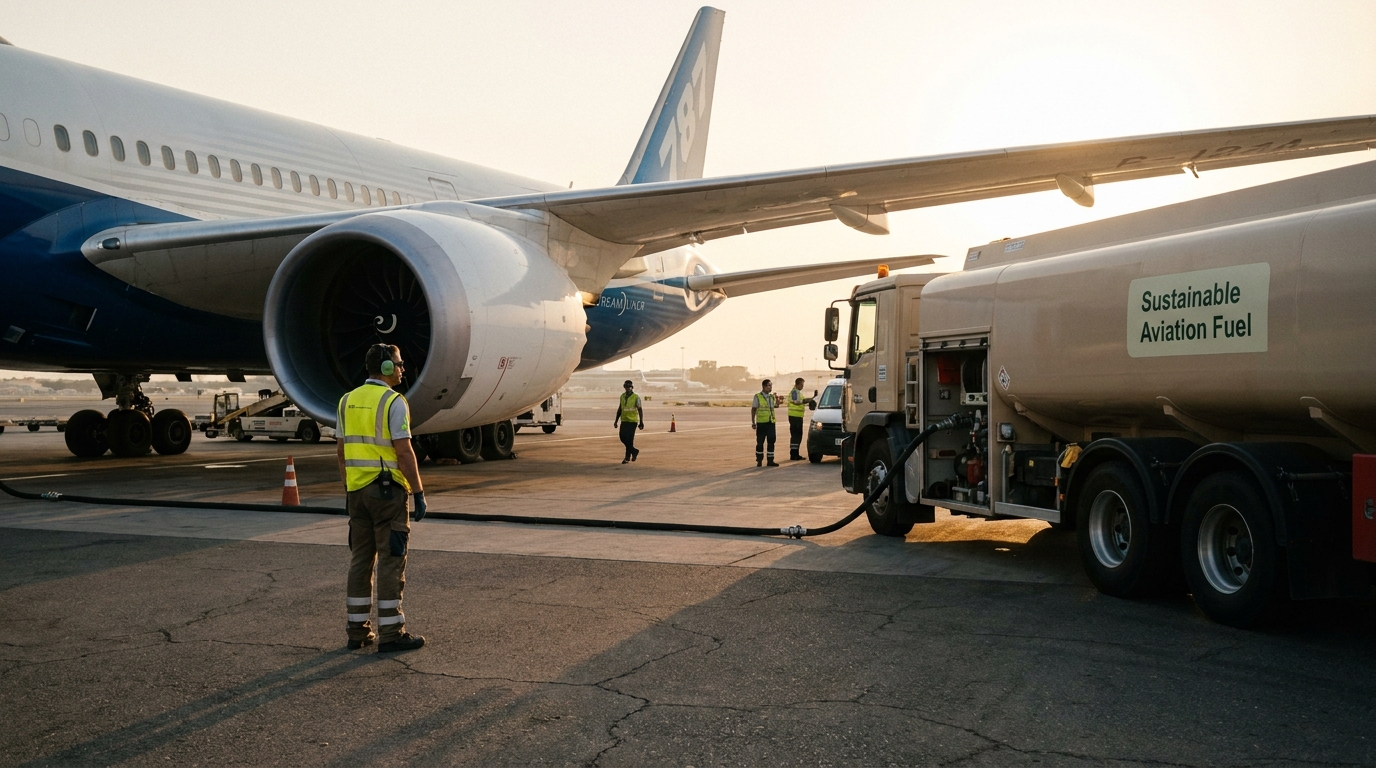
Prompted by disruptions in the Middle East, Johan Danielsson (S&D) submitted E-001618/2026 on 21 April 2026 to assess the EU’s preparedness regarding aviation fuel availability. The question asks whether the Commission intends to propose EU-wide requirements for minimum aviation fuel stock levels at major airports and what concrete measures will be taken to accelerate sustainable aviation fuel (SAF) production capacity to meet obligations under the ReFuelEU Aviation Regulation. A response from the Commission is pending.
❓ Impact of ReFuelEU Aviation on the current crisis in the aviation fuels market
Citing global oil supply shocks and systemic shortages of aviation fuel, Kosma Złotowski (ECR) submitted E-001676/2026 on 23 April 2026. The MEP inquired whether the Commission is analysing the impact of the ReFuelEU Aviation Regulation on current fuel availability and airfares, and whether it is considering introducing flexibility mechanisms to suspend or adjust mandatory SAF blending levels during serious market disruptions. A response from the Commission is pending.
❗ Export credits for fossil fuel energy projects
Seeking clarity on due diligence and the phase-out of export credits for fossil fuel projects, E-000966/26 addressed the alignment of Member State actions with EU climate goals. In a response on 29 April 2026, Commissioner Šefčovič explained that starting with the 2023 reporting year, the annual review of Export Credit Agencies includes detailed information on climate policies and justifications for remaining fossil fuel transactions. He clarified that primary responsibility for due diligence lies with individual Member States, though the Commission monitors alignment with EU objectives when reviewing Member State reports.